
Hydras are giant, multi-headed reptilian monsters often possessing powerful regenerative abilities.
Fictional hydras trace their roots to the Lernaean Hydra, which inhabited the Swamps of Lerna in Greek myth until slain by Heracles. Like many monsters with mythical origins, hydras are often one of a kind. The original Hydra of Greek myth was a singularly named monster. Still, the name is now typically used for the entire species of multi-headed reptiles fashioned after the Greek Hydra.
One of the most iconic characteristics of hydras is their ability to regrow severed heads; sometimes they will regrow a new head whenever an old one is cut off, but they can often grow multiple heads (traditionally two) for every one lost. As a result, most obvious ways of dealing with these beasts tend to be useless at best and actively counterproductive at worst, requiring would-be hydra slayers to get creative with their methods. Even when hydras can't grow back heads, they'll often have some form of regeneration ability.
Like the original Greek beast, hydras are often swamp-dwellers, so they can easily be the resident swamp monster in an evil swamp setting.
As the original hydra was typically described as a many-headed water snake, modern hydras often display ophidian traits to varying degrees. They may be depicted as limbless, snake-like slitherers. Still, in contemporary media, they're usually four-legged creatures, generally resembling some lizard or dinosaur, with a writhing tangle of heads sprouting from their torsos.
While not overwhelmingly common, it's not unheard of for a link to be made between hydras and dragons. Some works will treat the two creatures as distinct but similar or related species, while others have hydras as a specific sub-type of dragons. If a breath attack is present, it's common for each head to possess a different one. Works that define hydras as a form of dragon are the likeliest to give them traits such as legs, stubby wings, and horns, thereby increasing their physical resemblance to how dragons are usually depicted.
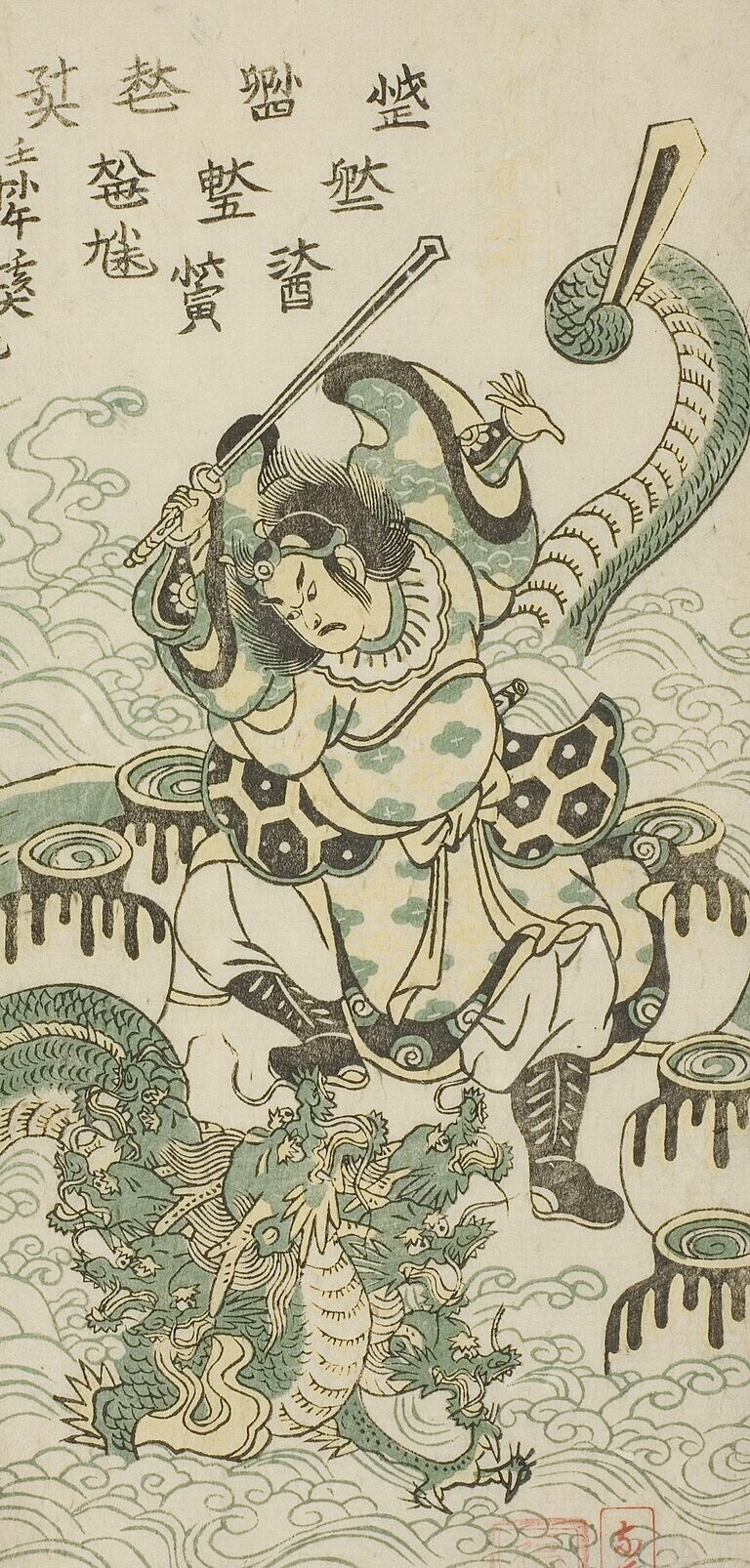
Similar in appearance to the Lernaean Hydra is the Yamata no Orochi (meaning "Great Snake of Eight Branches"), an eight-headed, eight-tailed serpentine monster in Japanese mythology that was killed by the storm god Susano-o, who found the sword Kusanagi hidden inside one of the serpent's tails. Many stories portray Orochi as the ultimate big bad of Japanese mythology, surpassing even Amatsu-no-Mikaboshi, because the legend of Orochi is arguably the most popular tale of the mythology. According to a wide assortment of anime and video game series, the Orochi is alive and well and at large in present-day Japan. Sometimes it's literally Orochi, or anything from a monster of the week to a big bad with snake-themed powers.
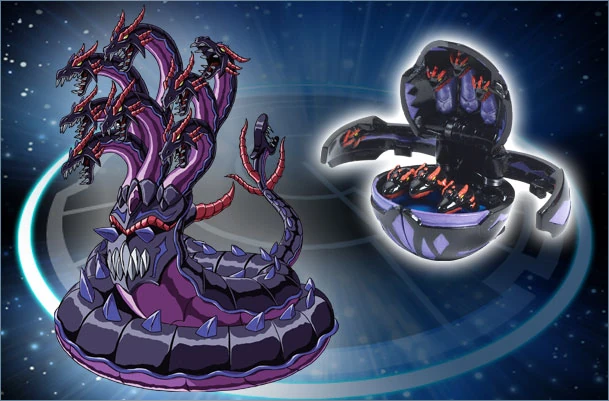
Example of a Hydra: Exedra from Bakugan.
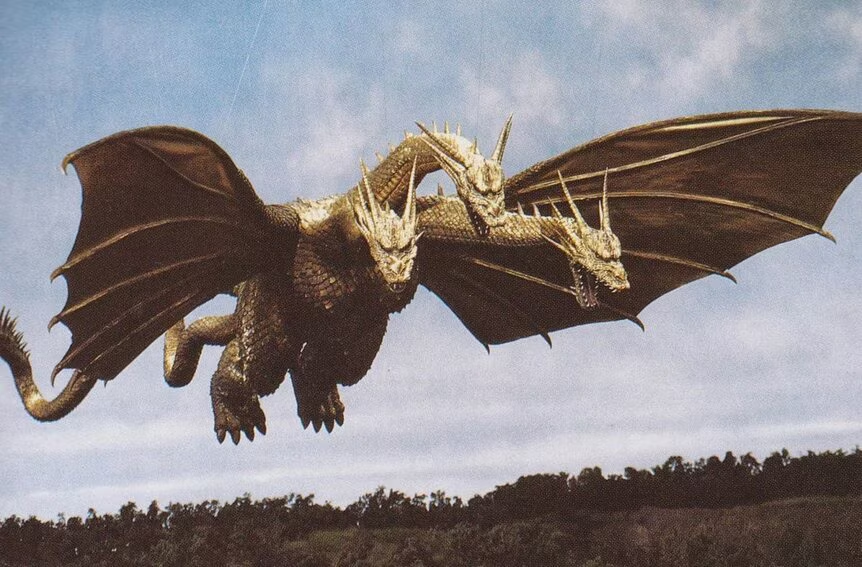
King Ghidorah from Godzilla is partly inspired by both the Greek Hydra and the Japanese Orochi.